
Water extraction and controlled demolition
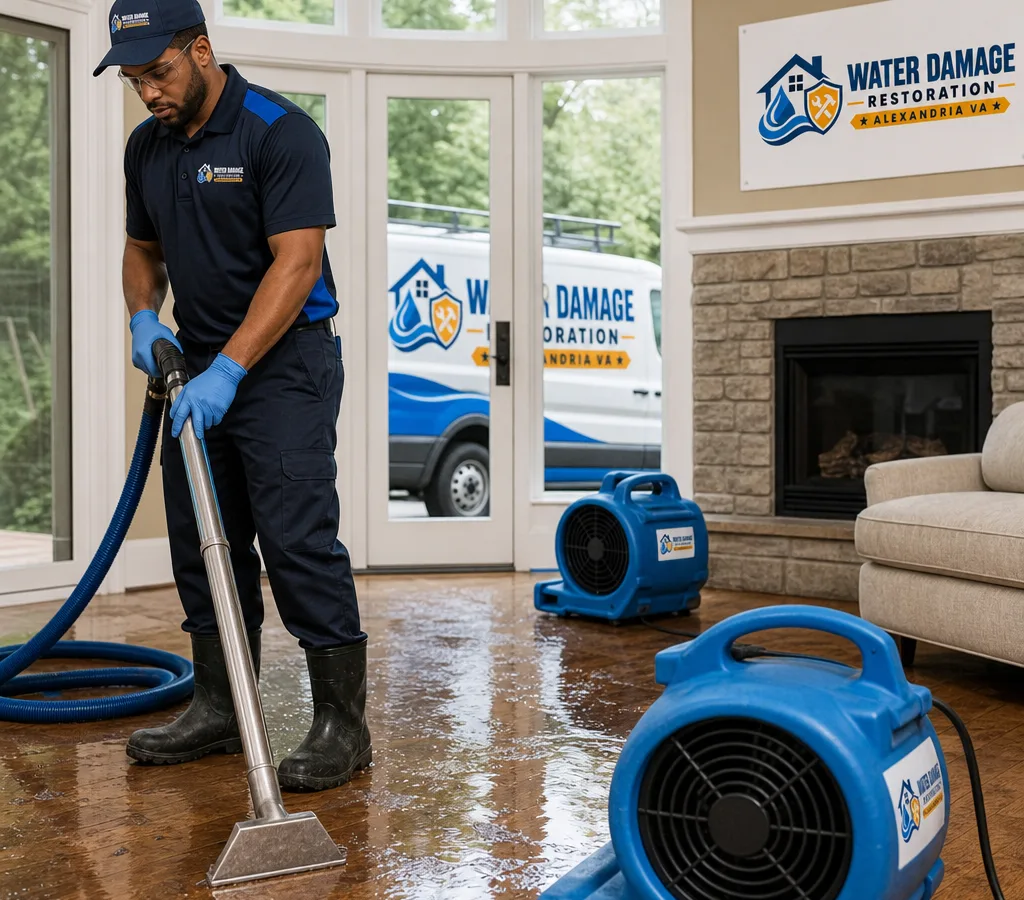
We remove standing water and, when needed, open up wet assemblies (baseboards, small drywall flood cuts, compromised flooring) so trapped moisture can actually dry.
Serving Alexandria, Virginia & surrounding areas
Water Restoration · Alexandria VA
Fast water extraction, structural drying, and careful repairs for homes and businesses. Get a clear plan to protect materials, prevent mold, and restore the space the right way.
Immediate Water-Loss Orientation
When water gets into your property, time is the main variable you can still control. Water restoration in Alexandria, VA typically starts with stopping the source (if possible), extracting standing water, and drying the structure before moisture migrates deeper into drywall, insulation, subfloors, and cabinetry.
At Water Damage Restoration Alexandria VA, our job is to bring the building back to a clean, dry, stable condition so repairs can hold long term. That means using moisture mapping and documented drying targets, not guessing based on how a room looks. We handle common water loss situations around Alexandria like supply-line leaks, overflowing tubs, appliance failures, water heater leaks, and storm-related intrusions.
Alexandria's mix of older homes, condos, and river-adjacent areas means we often see tricky assemblies: plaster walls, hardwood over older subfloors, and finished basements where water can hide behind baseboards and under floating floors. If you are looking for water restoration Alexandria VA help, the right next step is an on-site inspection that identifies what is wet, what can be saved, and what must be removed to dry safely.
Restoration Scope
We remove standing water and, when needed, open up wet assemblies (baseboards, small drywall flood cuts, compromised flooring) so trapped moisture can actually dry.
Air movers, dehumidifiers, and targeted airflow are set based on room conditions. We track moisture content in materials over multiple visits until drying goals are met.
Surfaces and affected areas are cleaned based on the type of loss. When contamination is possible, we use appropriate antimicrobial cleaning and disposal practices.
After water events, odors often come from wet porous materials or hidden microbial growth. We address the source instead of masking smells.
Once drying is verified, we outline what comes next for repairs, from drywall and trim to flooring and paint, so the space returns to normal use.
Clear photos, moisture readings, and a written scope help support insurance claims and reduce back-and-forth about what was necessary.
Alexandria Property Context
Water rarely stays where you first see it. It moves through framing bays, under flooring, and along the path of least resistance. In a rowhouse or townhouse, that can mean water traveling between levels. In a condo, it can affect neighboring units quickly.
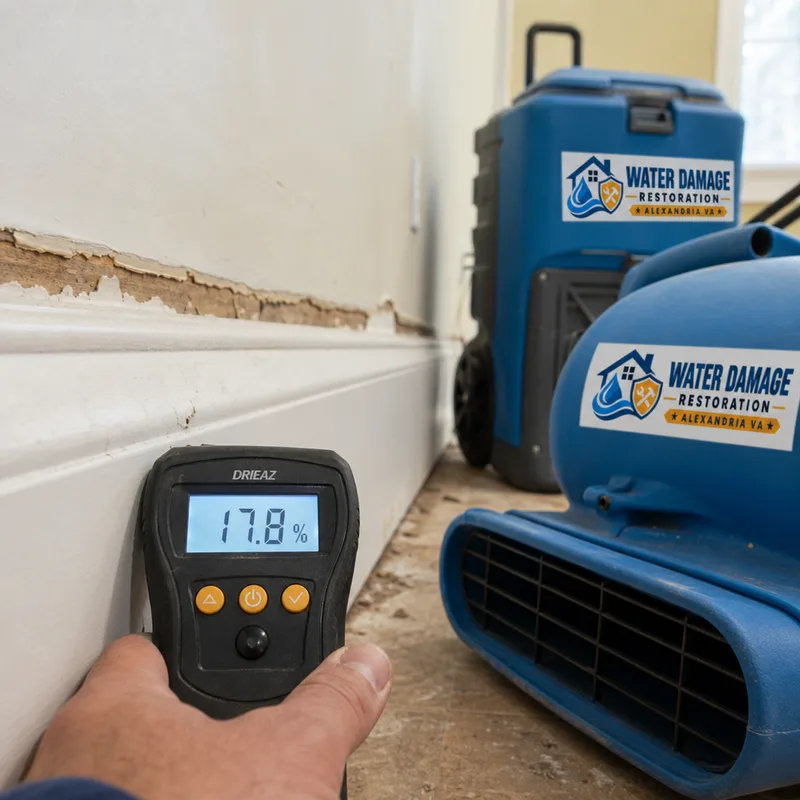
We start with a moisture inspection using meters and, where appropriate, thermal imaging to locate wet materials behind surfaces. Then we build a drying plan around the materials present. Hardwood, plaster, and dense trim dry differently than modern drywall. Cabinets and toe-kicks can hold water. Insulation can stay saturated even when the wall surface feels dry.
If your property is near the Potomac River corridor or has a finished lower level, it is especially important to confirm what is happening behind walls and under floors. The goal is simple: dry the structure completely, remove what cannot be dried safely, and leave the space clean and ready for repairs.
Inspection to Verification
A measured workflow controls immediate hazards, maps hidden moisture, removes water, and verifies drying before repairs begin.
We look for electrical hazards, contaminated water concerns, and active leaks. If the source is still active, we help you identify immediate steps to stop further damage.
We document affected rooms and measure moisture in materials. This defines the scope: what can be dried in place and what needs removal for access.
Standing water is extracted first. Then we remove wet materials that will not dry properly or that could hold contamination, such as soaked carpet pad or swollen particleboard.
We set equipment to control humidity and airflow, and we use containment when needed to protect clean areas and keep dust and debris controlled.
Drying is not a one-and-done setup. We re-check moisture levels, adjust equipment placement, and confirm progress until targets are met.
After drying is verified, we provide a clear outline of recommended repairs so rebuilding can proceed without locking moisture into the structure.
Planning the Scope
Water restoration in Alexandria typically ranges from about $900 to $6,500+, depending on how far water traveled and what materials were affected. A small contained leak with limited drywall removal may fall closer to the low end, while multi-room losses, wet hardwood, or a finished basement with saturated contents can push costs higher.
Final pricing changes with the category of water (clean vs. potentially contaminated), the amount of demolition required for access, equipment days needed to reach drying goals, and how much repair work is included. The exact cost is confirmed after an on-site inspection and moisture mapping.
Customer Experience
“A supply line leak soaked our kitchen floor overnight. They found moisture behind the baseboards we never would have noticed, explained what had to come out, and kept checking readings until it was truly dry.”
“We're in a condo and needed someone who could document everything clearly. The scope and photos made the insurance conversation much easier, and the drying plan was adjusted as conditions changed.”
Property Owner Questions
Start as soon as possible, ideally the same day, because moisture begins moving into drywall, trim, and subfloors quickly. Even if the surface looks dry, hidden cavities can stay wet and create odor and mold risk. An early inspection in Alexandria homes often prevents a small loss from turning into a multi-room removal.
We can manage the full water restoration scope, including extraction, drying, cleaning, and coordinating repairs after drying is verified. Some projects only need mitigation and drying, while others require rebuilding like drywall, trim, flooring, and paint. The right approach depends on what materials were affected and whether they can be dried to an acceptable moisture level.
Clean water usually comes from a supply line or a recent appliance leak, while contaminated losses may involve sewage backup or water that has contacted ground or waste. The category changes what materials can be saved and the cleaning steps required. If there is any doubt, we plan for a safer handling and disposal approach rather than treating it as a simple clean-water dry-out.
Sometimes, yes, because trapped moisture will not dry correctly if the assembly stays sealed. We aim to remove the minimum needed to create drying access, such as baseboards, a controlled flood cut, or sections of damaged flooring. In Alexandria properties with hardwood or older wall assemblies, the decision often comes down to moisture readings and whether drying progress is consistent.
Most structural drying takes several days, but the timeline depends on how saturated materials are, temperature and humidity conditions, and what is behind the surfaces. We monitor progress and adjust equipment instead of relying on a fixed number of days. Drying is complete when verified moisture readings show materials have returned to a safe range for repair.
Yes. We provide photos, moisture documentation, and a written scope that helps support the claim and clarify why specific removal and drying steps were necessary. Coverage varies by policy and cause of loss, but clear documentation typically reduces delays and disputes about scope.
If it is safe, stop the water source and shut off power to affected areas if water is near outlets or fixtures. Move small valuables and absorbent items out of the wet zone, and avoid running HVAC if you suspect contamination. Try not to remove materials blindly, because controlled removal and documentation often matters for repairs and insurance.
Start With an On-Site Inspection
Tell us what happened and what areas are affected. We will schedule an on-site inspection, explain what can be saved, and provide a written scope for drying, cleanup, and repairs. You can also learn more about our team at Water Damage Restoration Alexandria VA.