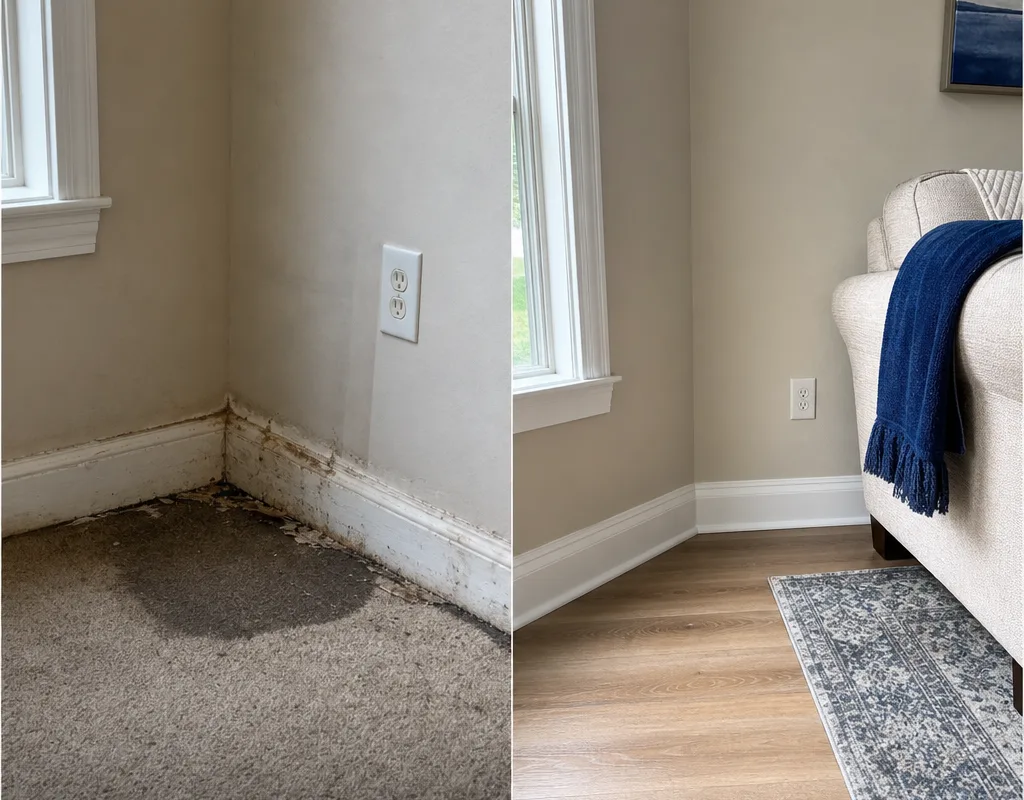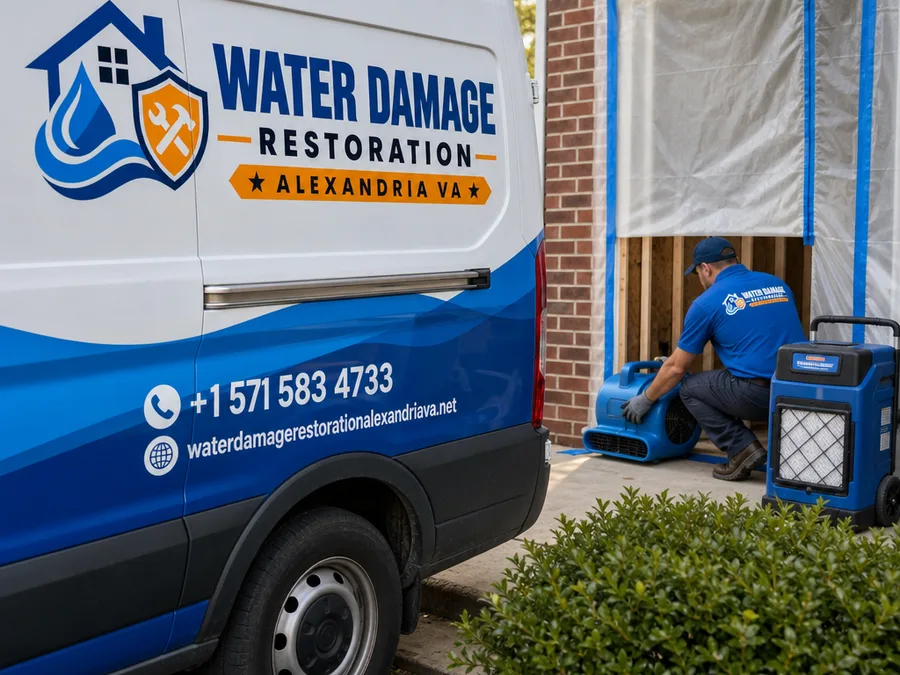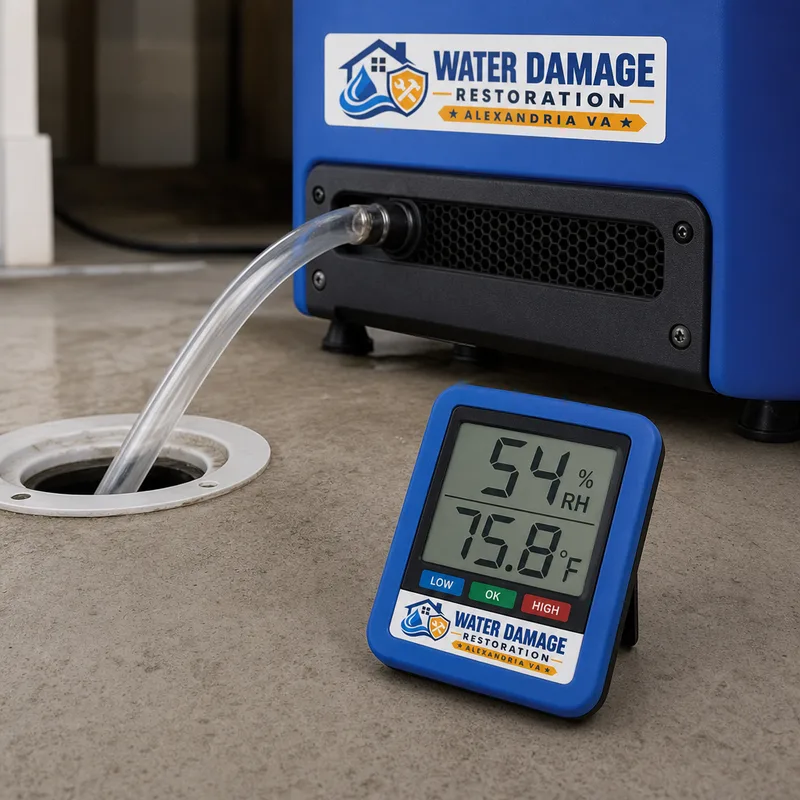
Water extraction and debris control
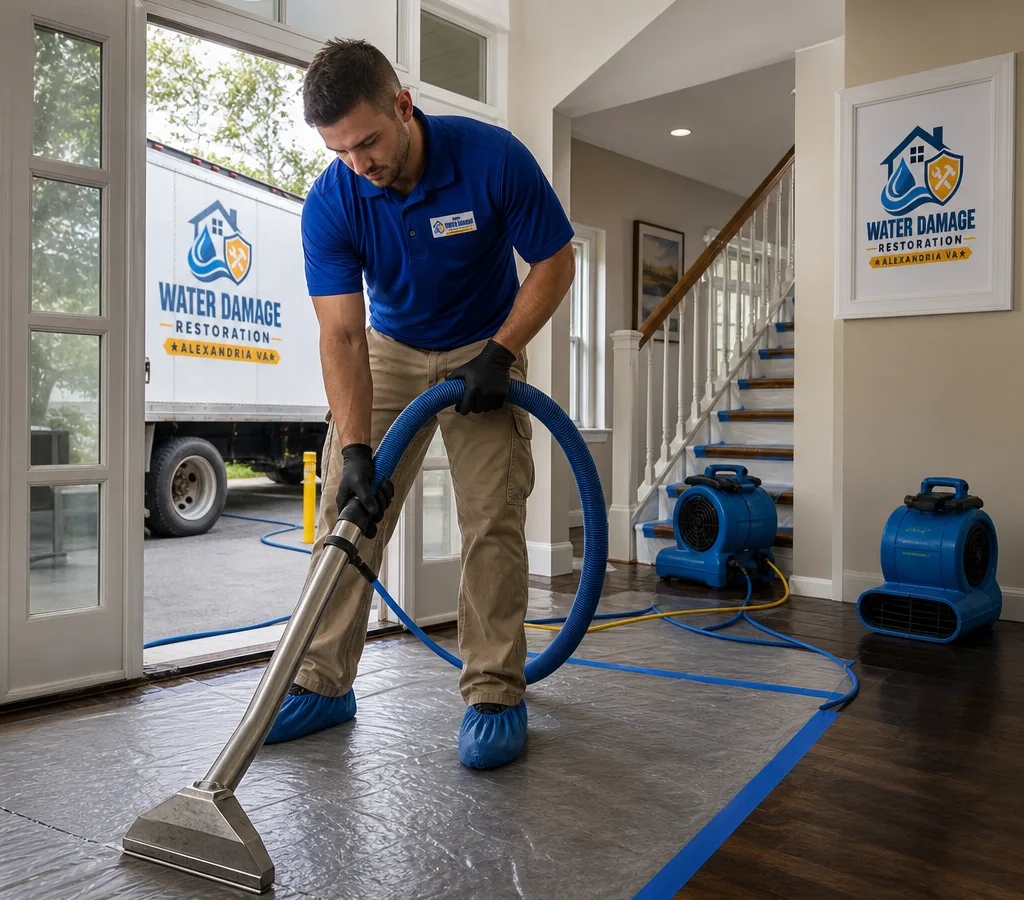
We remove standing water with professional extraction, then protect unaffected areas with containment where needed to keep traffic, dust, and damp materials from spreading through the property.
Serving Alexandria, Virginia & surrounding areas
Water Damage · Alexandria VA
Fast response for leaks, floods, and storm water. We extract water, dry the structure, document the loss, and restore your property with a clear plan from the first visit.
Fast Damage Control
If you are dealing with water damage Alexandria VA property owners see after a supply-line leak, overflowing fixture, or storm intrusion, the first priority is stopping the spread. Water travels under flooring, into drywall, and through framing cavities fast. The longer it sits, the higher the risk of swelling materials, delamination, odor, and microbial growth.
Water Damage Restoration Alexandria VA handles the full water damage Alexandria process: emergency extraction, controlled drying and dehumidification, monitoring, and the repairs needed to put the space back into service. We focus on getting you accurate moisture readings and a documented drying plan so decisions are based on conditions, not guesswork.
Alexandria's mix of older masonry and plaster homes, townhomes, and condo buildings means water can hide in places that are easy to miss, like behind baseboards, inside shared walls, and below floating floors. Our approach is to find the wet materials early, isolate the affected area, and dry it correctly the first time.
Restoration Scope
We remove standing water with professional extraction, then protect unaffected areas with containment where needed to keep traffic, dust, and damp materials from spreading through the property.
Drying is controlled with air movers and dehumidifiers sized to the loss. We track moisture in drywall, framing, and subfloors and adjust the setup as readings change.
You get a clear scope of what is wet, what can be dried in place, and what needs removal. We document moisture and conditions to support insurance discussions when a claim is involved.
When materials cannot be dried safely, we remove only what is necessary—for example, baseboards, affected drywall cuts, or saturated insulation—to open cavities for proper drying.
After drying targets are met, we complete the rebuild work such as drywall, trim, paint, and flooring coordination so the space returns to pre-loss condition.
Measured Drying Plan
Every loss is different, but the technical goal stays the same: remove water, dry to a verified standard, and then rebuild.
We start by identifying the source and the water category—clean, gray, or contaminated. This matters because a clean supply-line leak can often be dried with minimal removal, while a backup or ground water intrusion may require more aggressive removal and cleaning.
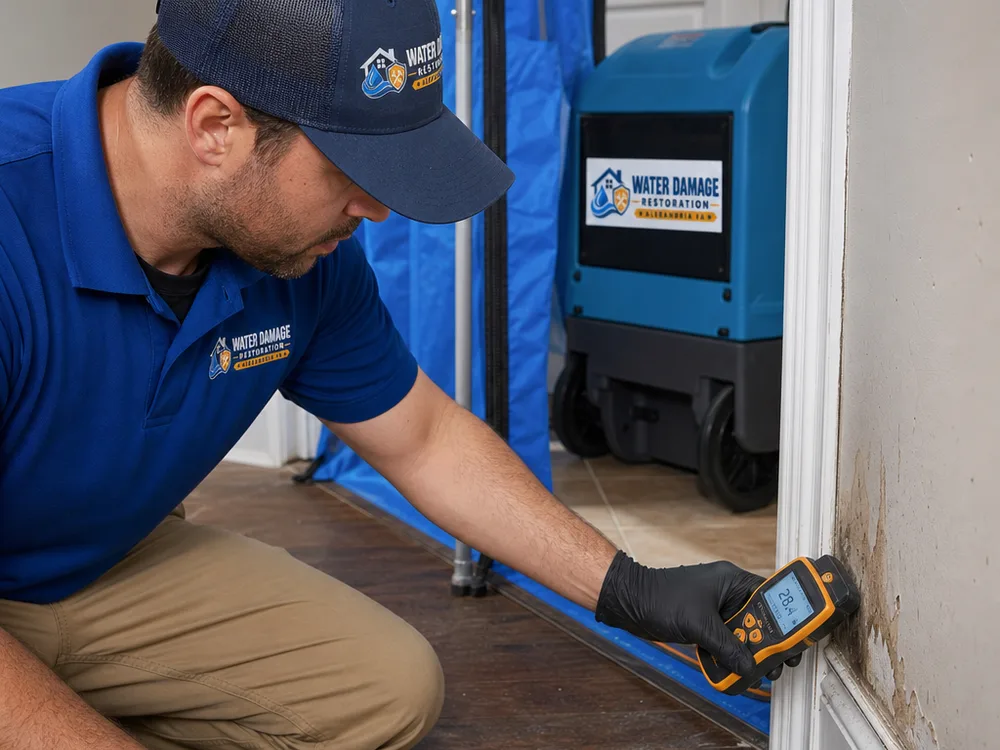
Next we map the wet area using moisture meters and, when needed, thermal imaging as a screening tool. In Alexandria townhomes and multi-family buildings, we also look for migration into shared walls and lower levels so the problem is contained early.
Drying is set up with a deliberate balance of airflow and dehumidification. We monitor and log moisture readings during the dry-out, then remove equipment only after materials meet appropriate dry standards. Once the structure is dry, we move into repairs and finishing work.
If you are comparing providers, start with a team that can clearly explain their drying plan and show you the readings that support it. You can also get a feel for our approach and service area through Water Damage Restoration.
Inspection to Restoration
A measured workflow tracks moisture from the first inspection through drying, repairs, and final cleanup.
We inspect the affected rooms, identify likely migration paths—under floors, behind cabinets, and inside wall cavities—and record baseline moisture readings.
Standing water is removed and wet contents are separated from the work area. If needed, we perform controlled removal of materials that trap moisture and prevent drying.
We place air movers and dehumidifiers based on room size, materials, and humidity conditions, then establish drying targets for key materials like subfloors and framing.
We re-check moisture and relative humidity, reposition equipment, and update the drying plan until readings show the structure is dry.
After dry-out, we complete the repair scope—drywall, trim, paint, and flooring coordination—and leave the area clean and ready for normal use.
Planning the Scope
Water damage restoration in Alexandria typically ranges from about $1,200 to $6,500+, depending on how far water traveled and what materials are affected. A smaller clean-water event limited to one room is often on the lower end, while multi-room losses, wet subfloors, or contaminated water require more labor, equipment time, and material removal.
Final cost depends on square footage, category of water, how long it sat, required demolition, drying days, and rebuild scope. The exact price is confirmed after an on-site inspection and moisture mapping so the scope matches the real conditions.
Property Owner Questions
Start as soon as it is safe because water spreads under floors and into walls quickly, and drying becomes harder the longer materials stay wet. Even a small leak can soak padding, subfloor seams, and drywall edges, which can lead to swelling and odor. If you cannot stop the source safely, shut off the local supply or main water and keep people out of affected areas until a professional inspection.
Most structural dry-outs take about 3 to 5 days, but the timeline changes with humidity, how deep the water traveled, and whether cavities like insulation and subfloors are saturated. In Alexandria rowhomes and condos, shared wall assemblies and tight spaces can also extend drying because access points may be needed to get airflow where moisture is trapped. Drying is complete when verified moisture readings meet appropriate dry standards for the materials.
Not always, but removal is common when the bottom edge of drywall is wet, insulation is saturated, or the wall cavity cannot dry with equipment placed in the room. Baseboards often come off to check wicking and open the wall edge for airflow. The decision should be based on moisture readings and the water category, not appearance alone.
It depends on the flooring type and how long it stayed wet. Carpet and pad often need pad replacement even when carpet can be cleaned and reinstalled, while hardwood and engineered wood may cup or delaminate if moisture remains in the subfloor. Tile can hide water in grout lines and underlayment. A moisture check of both the surface and subfloor is the best way to decide what can be saved.
Yes. We document moisture readings, equipment usage, and the drying plan so the claim discussion is based on measured conditions. Coverage and deductible decisions come from your policy, but clear documentation helps explain what was affected, what was required to dry it, and what repairs are needed to restore the space.
If it is safe, stop the water source, shut off electricity to wet areas, and move small valuables to a dry room. Avoid running household fans into wall cavities or turning up HVAC indiscriminately, because improper airflow can spread moisture or contaminants. Take a few photos of the affected areas for your records, then keep foot traffic off wet floors to reduce slipping and additional damage.
Start With a Moisture Inspection
Tell us what happened and what areas are affected. We will schedule an inspection, map the moisture, and explain the next steps for water removal, drying, and restoration in Alexandria, VA.