
Clear inspection findings
We document where we see growth, the likely moisture driver, and which materials are affected (drywall, insulation, wood framing, carpet pad, HVAC components).
Serving Alexandria, Virginia & surrounding areas
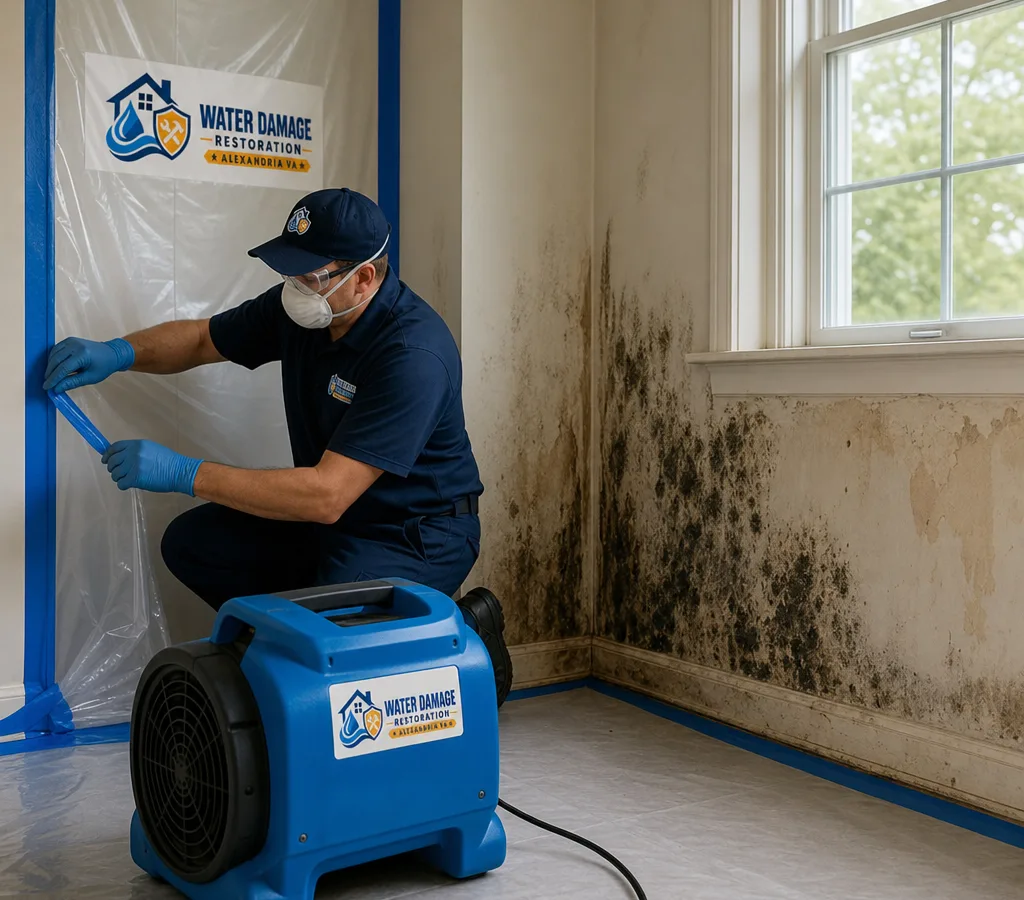
Mold Remediation · Alexandria VA
If you smell musty odors, see staining, or have had a leak, we can inspect, contain, remove contaminated materials, and clean the air so your property is safe to use again.
Cause-First Remediation
Searching for mold remediation Alexandria VA usually means something else already happened: a slow plumbing leak under a sink, a wet basement corner after heavy rain, a bathroom fan that never kept up, or a past water event that did not fully dry. Mold can start growing on damp building materials within 24 to 48 hours, and it spreads by microscopic spores that move with airflow.
Our approach is straightforward: confirm what is actually growth versus staining, isolate the work area to keep spores from spreading, remove or treat affected materials based on industry standards, then clean and verify conditions before we take containment down. Just as important, we help you pinpoint the moisture source so the problem is less likely to come back.
We work throughout Alexandria, including older rowhomes and condos near Old Town where tight wall cavities and shared walls can hide dampness, and single family homes in neighborhoods like Del Ray where older bathrooms and crawlspaces can trap humidity. Mold remediation is often the next step when materials stayed wet long enough for growth to develop.
Remediation Standards
We document where we see growth, the likely moisture driver, and which materials are affected (drywall, insulation, wood framing, carpet pad, HVAC components).
We use plastic sheeting, sealed registers as needed, and HEPA-filtered negative air to control cross-contamination in occupied homes and active businesses.
Remediation without moisture control fails. We look for active leaks, condensation points, and humidity issues, then recommend practical corrections.
After removal, we HEPA-vacuum and damp-wipe impacted surfaces to reduce spores and dust, with extra attention to edges, ledges, and returns.
When porous materials are compromised, they are removed in a controlled way. Non-porous and some semi-porous materials may be cleaned or treated when appropriate.
We plan access, containment placement, and scheduling to keep disruption down in condos, townhomes, and commercial suites.
Complete Scope
A complete remediation job is a small project with a defined scope, not a single spray-and-go visit. Most mold remediation Alexandria VA projects include:
What a good plan does not do is hide the problem. Painting over staining, masking odors, or fogging without addressing wet materials can leave active growth in place. If you are in a condo building near the Potomac or have a lower level space, pay extra attention to humidity and condensation on exterior walls and around supply lines.
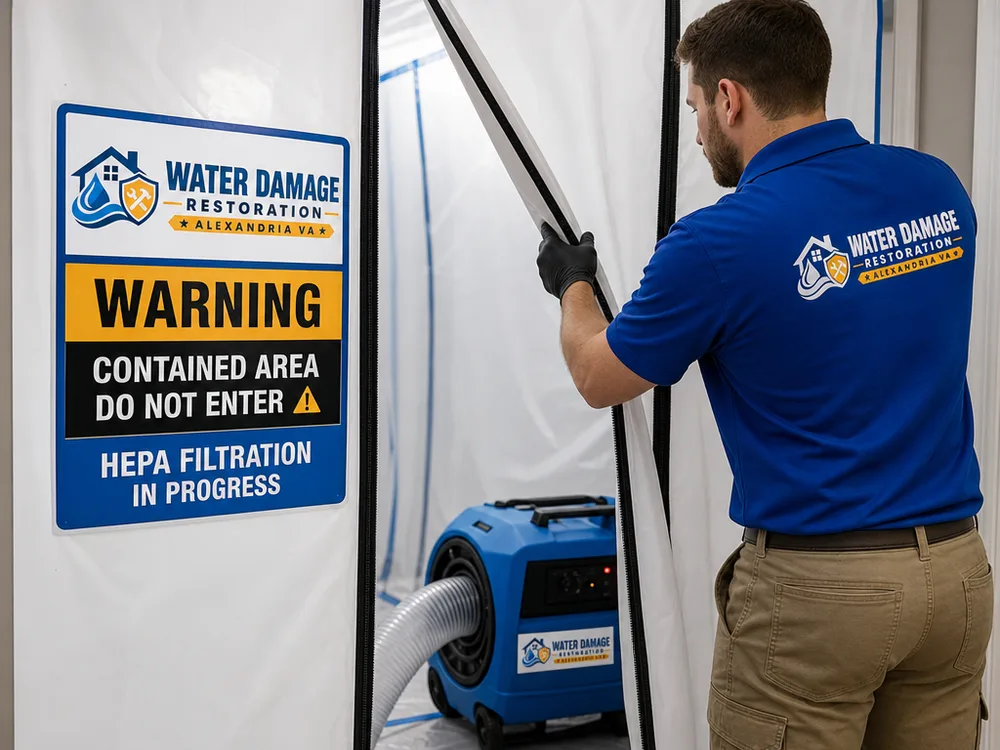
Inspection to Turnover
A controlled workflow keeps affected materials, airborne particles, and moisture correction organized from the first inspection through final cleanup.
We identify affected areas, likely moisture sources, and what needs removal versus cleaning. You get a written scope that matches what we can see and measure.
We protect floors and contents, seal the work zone, and set up negative air and filtration so adjacent rooms stay cleaner during the work.
Porous materials that cannot be reliably cleaned are removed and bagged. Remaining surfaces are HEPA-vacuumed and wiped to remove settled spores and debris.
We confirm that framing and surrounding materials are dry enough to close up. When the cause is ongoing, we outline the leak, ventilation, or humidity fix needed.
We clean the work zone, remove containment carefully, and review next steps for repairs or rebuild work if any materials were removed.
Planning the Scope
Mold remediation in Alexandria typically ranges from about $1,200 to $6,500+, depending on how large the affected area is and whether removal of drywall, insulation, flooring, or cabinetry is required. Small, contained jobs in a single room are often on the lower end, while multi-room contamination, HVAC involvement, or hidden growth behind walls can push costs higher.
Price is driven by square footage, containment complexity—especially in condos and occupied spaces—material disposal, access, and whether the underlying moisture issue is active. The exact cost is confirmed after an on-site inspection and a written scope.
Customer Experience
“We found mold behind the vanity after a slow leak. The team set up containment, removed the damaged drywall and insulation, and the air in the bathroom stopped smelling musty within a day or two. The scope was clear and the workspace stayed surprisingly clean.”
“Our tenant reported a mildew smell near the HVAC closet. They traced it to condensation and cleaned the area properly, then explained what needed to change so it would not keep happening. Communication was straightforward the whole time.”
Property Owner Questions
Start time depends on current workload and the size of the project, but urgent situations are typically scheduled as quickly as possible because mold can spread when moisture is still present. If there is an active leak or wet materials, the priority is inspection and containment planning so the affected area does not expand while you wait.
Many projects can be completed while you stay in the home, as long as the work area can be fully contained and there is a safe path for equipment and debris. If mold is widespread, involves a main living area, or affects HVAC distribution, temporary relocation may be recommended based on the specific conditions found during inspection.
Testing is not always required to start remediation because visible growth and moisture conditions often provide enough information to scope the work. When the situation is unclear, when documentation is needed for a third party, or when symptoms persist without an obvious source, testing can help guide the plan and define boundaries for cleanup.
Yes, but condo remediation often requires extra containment planning and coordination with building rules for access, elevator use, and debris handling. Shared walls and stacked plumbing can also mean the moisture source is not in the exact room where mold shows up, so the inspection focuses on adjacent wet areas and building pathways.
Bleach can lighten staining on some hard surfaces, but it does not solve the underlying moisture problem and it is not a complete remediation method for porous materials like drywall or insulation. A proper remediation plan focuses on controlled removal or cleaning of affected materials, HEPA cleaning, and verified dry conditions.
Common drivers include bathroom ventilation that cannot keep up with shower humidity, slow plumbing leaks inside vanities or behind toilets, condensation on supply lines, and damp lower level spaces that stay humid for long periods. Homes with older window and wall assemblies can also develop condensation points that keep framing or drywall lightly damp over time.
Start With an On-Site Inspection
Tell us what you are seeing and where it is happening. We will schedule an on-site inspection in Alexandria, explain what needs to be removed or cleaned, and outline the moisture fix that helps keep the problem from returning.